Quizlet · Motivation Design Sprint
Closing the Post‑Exam Retention Cliff
A four-day sprint that turned Quizlet's sharpest retention problem into two tested concepts and one prioritized growth bet
Students cram, then vanish
Quizlet never struggled to get students in the door. Exam panic did that for free. The leak sat one step later in the funnel: usage tracked exam dates, monthly actives were sliding, and whether a student ever came back was close to a coin flip. Nothing in the product gave them a reason to open the app on a day when nothing was due.
Motivation is the one thread across the whole student lifecycle
A student can be driven by an exam next Tuesday or by a career four years out. We picked motivation as the sprint topic because it is the only lever that reaches every stage of that journey. And the timing matters: Quizlet's core value, active recall, is strongest early, and fades exactly as the biggest questions arrive.
75% of US college students self-test and 47% space their studying, so the core behavior is real.
But it peaks early, while the decisions that actually shape a student's life land later. One concept had to serve each end.
The Motivation Framework
Where growth and retention were both winnable

Persona
Maya, "The Parachuter"
19, Psych major, existing Quizlet user. She drops in right before an exam and disappears when the pressure is gone. Already acquired, already converted. Moving her from 2 visits/year → 5 mins/day is the cheapest growth available to us.
4 days, 9 stakeholders, 2 bets
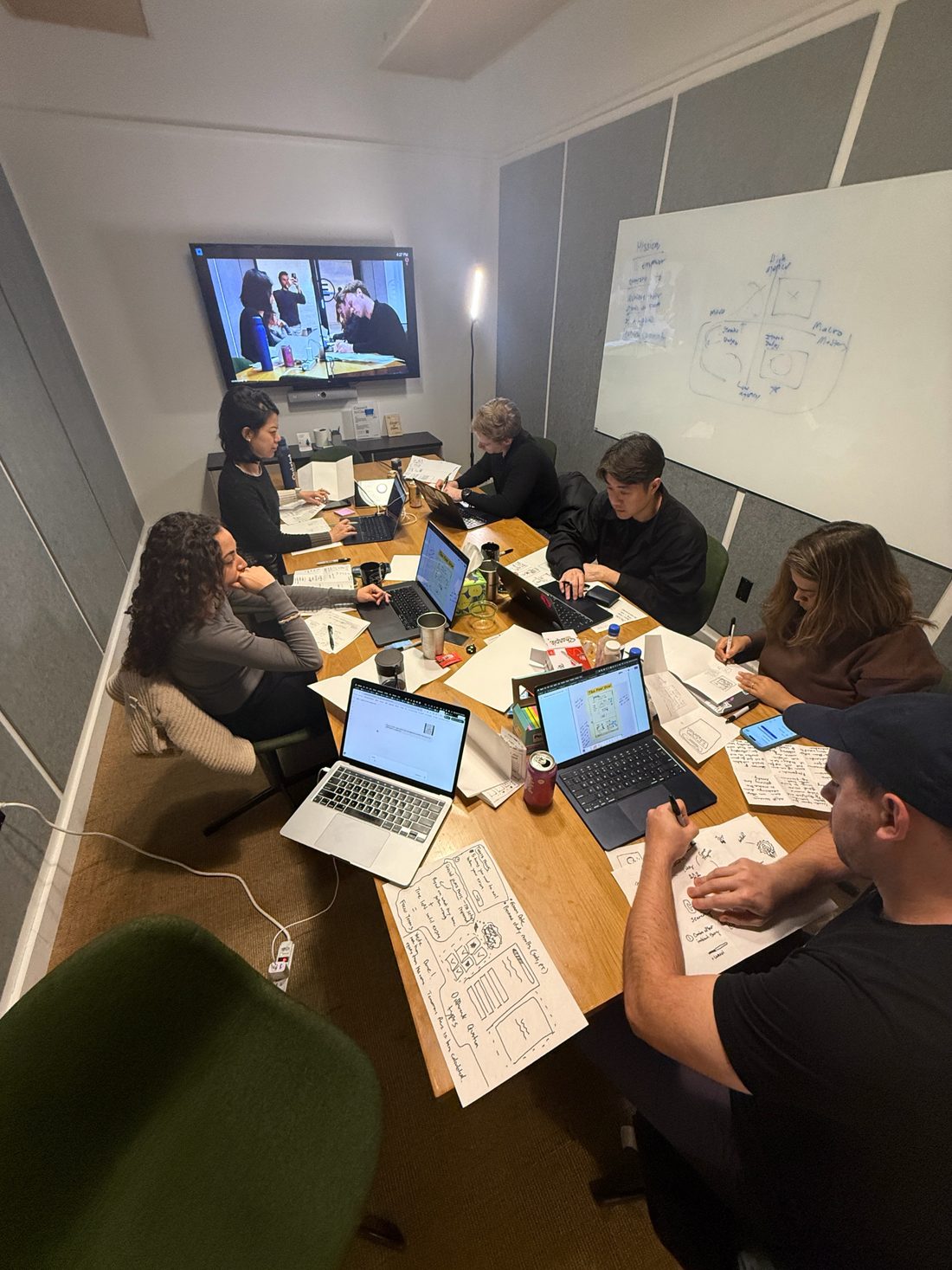
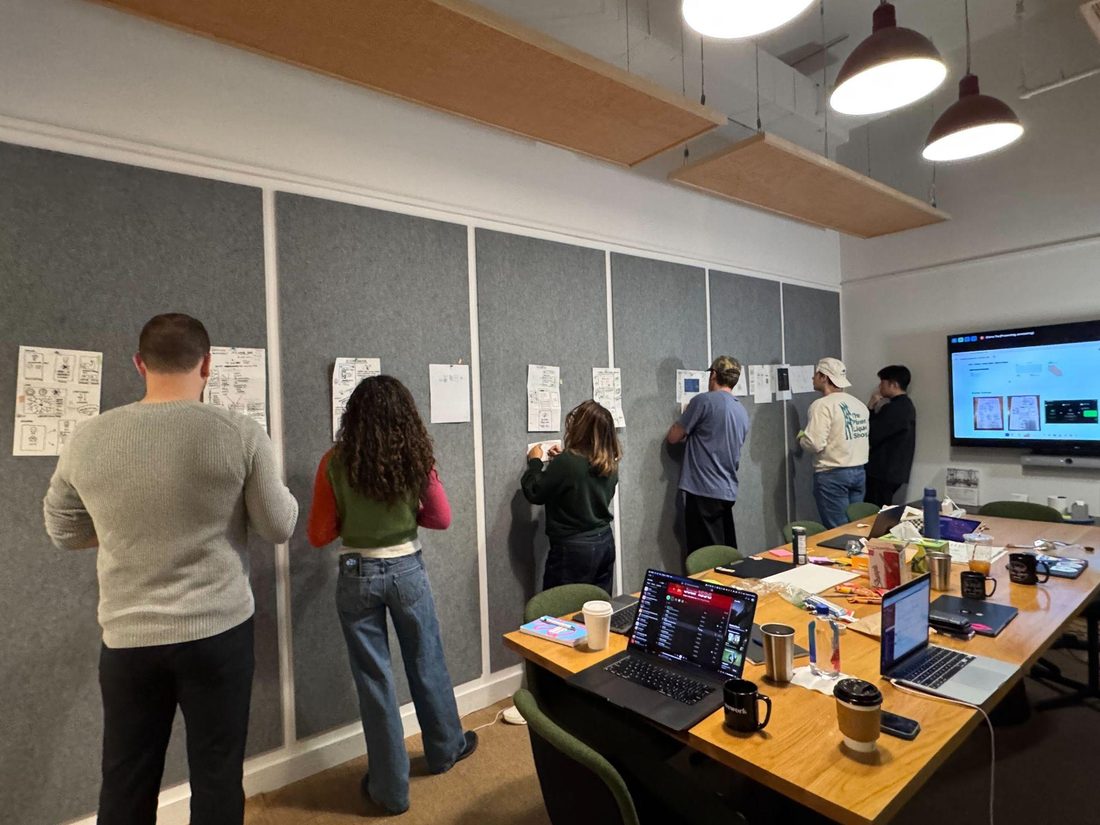
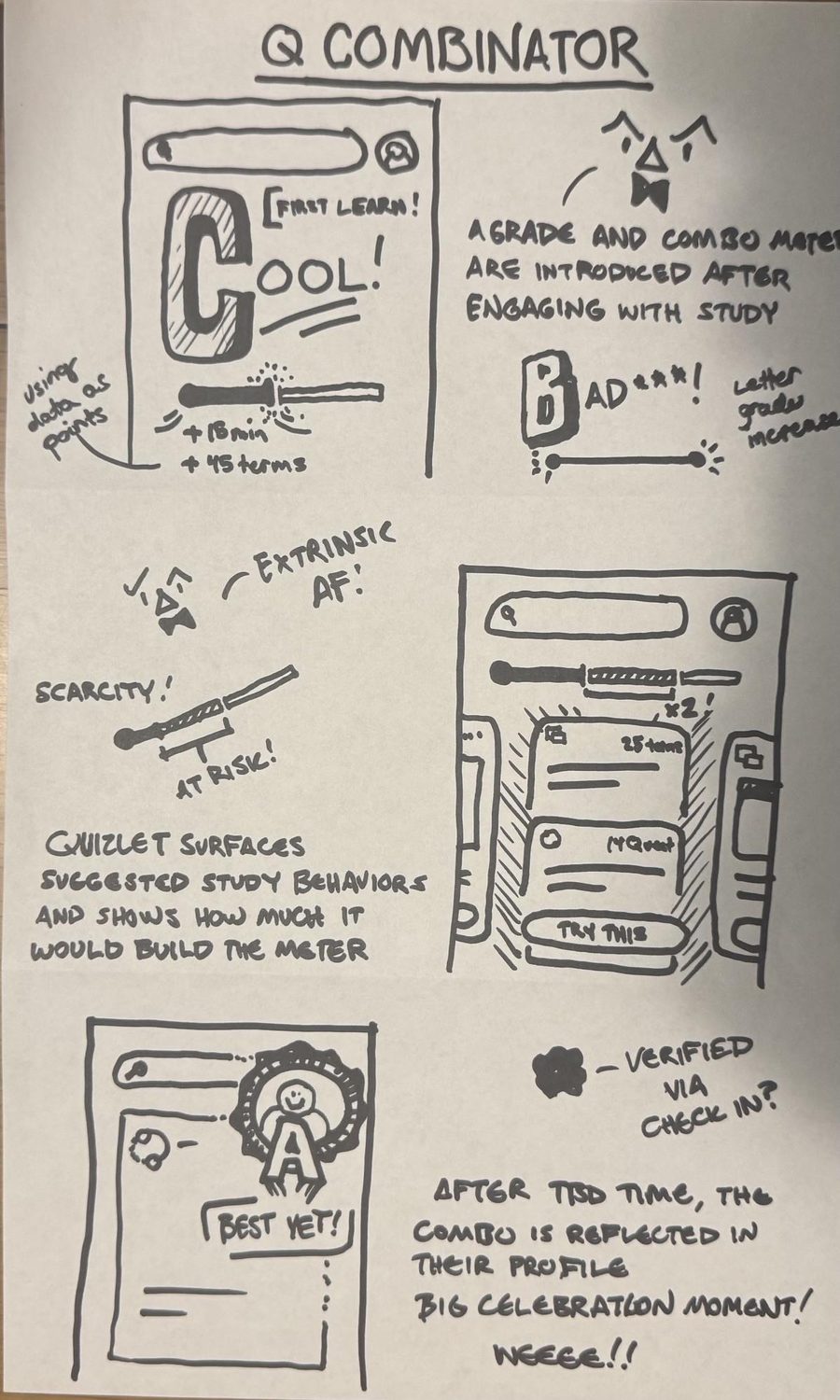
A compressed GV-style sprint with an explicit bar: diverge widely, converge on ideas worth betting on, and design mechanics that turn learning into retentive habits we could measure against core growth metrics. Every idea had to survive a vote, and every survivor had to face a real student by Friday.

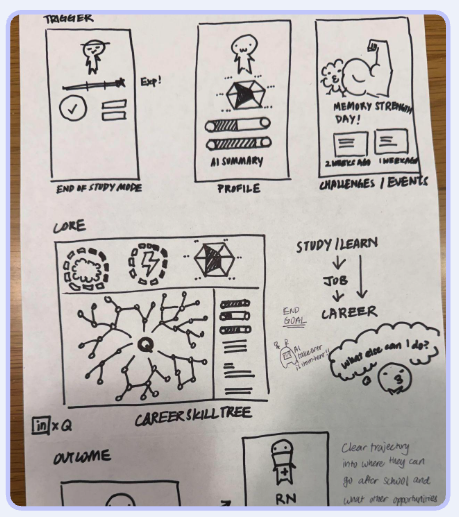
Two prototypes, two ends of the spectrum
One concept for the student with an exam on Friday. One for the student wondering what any of this is for.
Both were built, both were tested with real students.
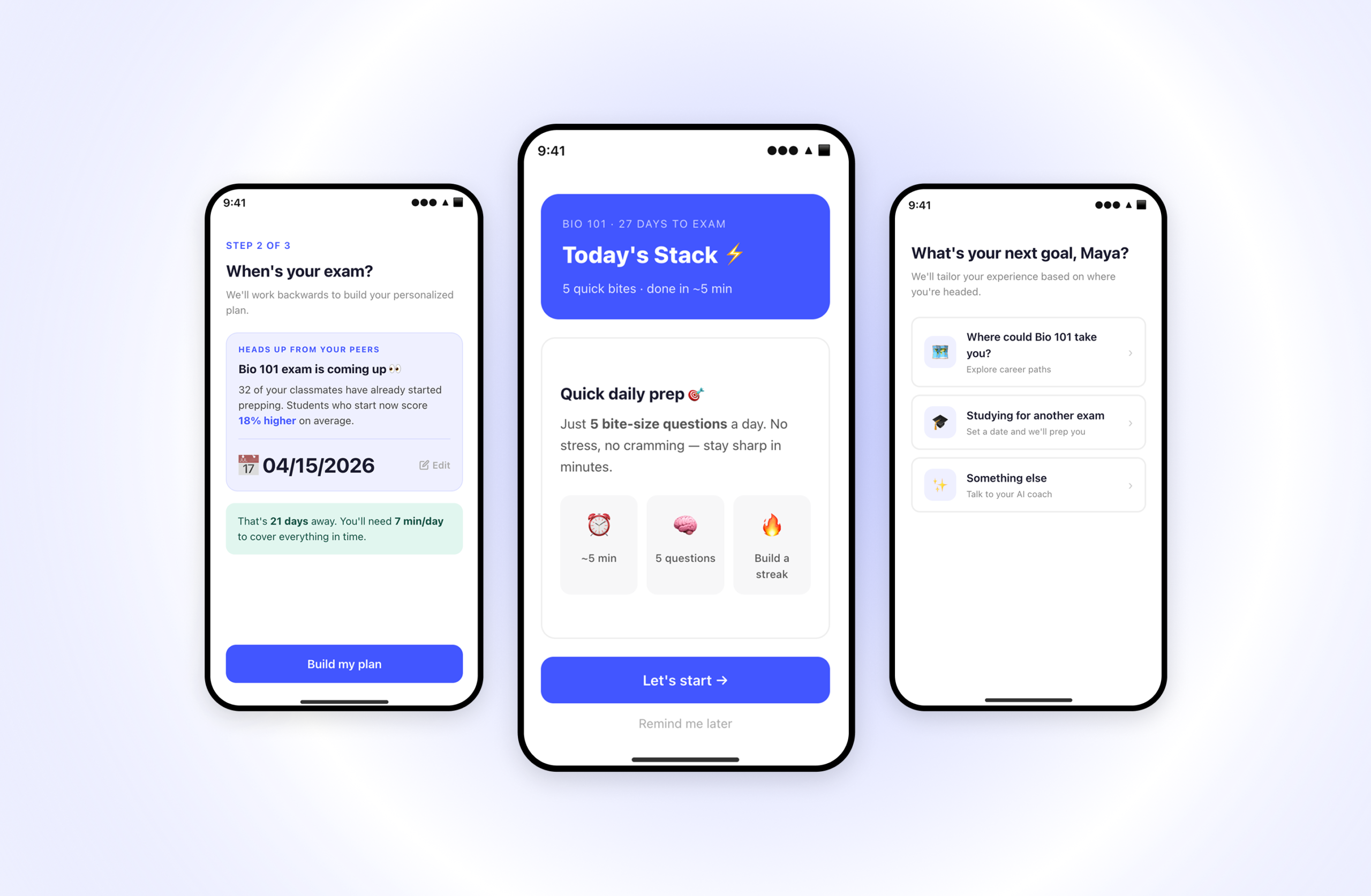
Today's Stack
Takes a student's goal and exam date and auto-generates a day-by-day plan, breaking the course into five bite-size actions, about five minutes a day, wired into notifications so the loop restarts on its own.
- Attacks the post-exam cliff directly
- Replaces one cram session with a daily habit
- Low agency × micro goals
If we remove the "what do I do next?" decision by auto-generating a personalized day-by-day plan from a student's goal or deadline, re-entry friction drops and students hold a steady study cadence. Visible progress toward a goal that matters makes that cadence self-reinforcing.
Knowledge Tree
Maps what a student is studying today onto the subjects, skills and careers it ladders up to, as a growing knowledge graph rather than a list of sets.
- Builds a reason to return that outlives any exam
- Connects coursework to subject mastery and career
- Low agency × macro goals
If we prove to students that they are gaining real-world skills rather than just passing tests, we drive long-term retention. Focusing on practical utility activates the deepest form of motivation and keeps users past the exam.
From Figma to functional
Prototyped with Claude Code, tested on the street
Day 4 needed more than a click-through. It needed prototypes that could think: plans that recalculate from any exam date, live quizzes, a working AI coach. I fed my Figma designs to Claude Code and turned them into interactive React, 21 screens across 5 flows in an afternoon, with no engineering support. Then we took them into the wild to test with real students.
Bet 1 · Near term
"Today's Stack" in the hand
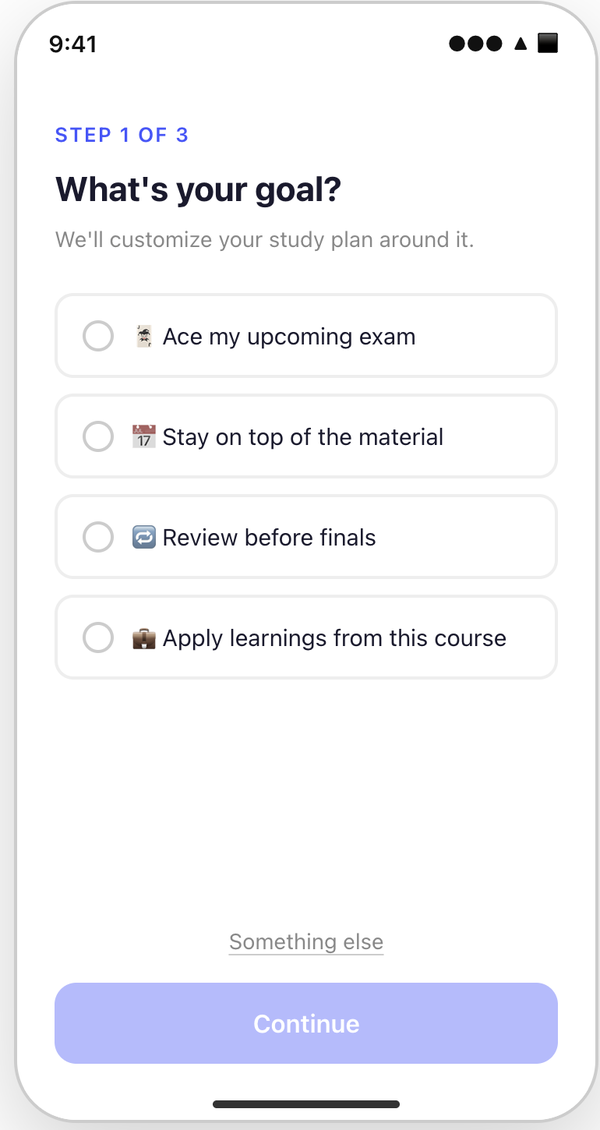 Start with the goal
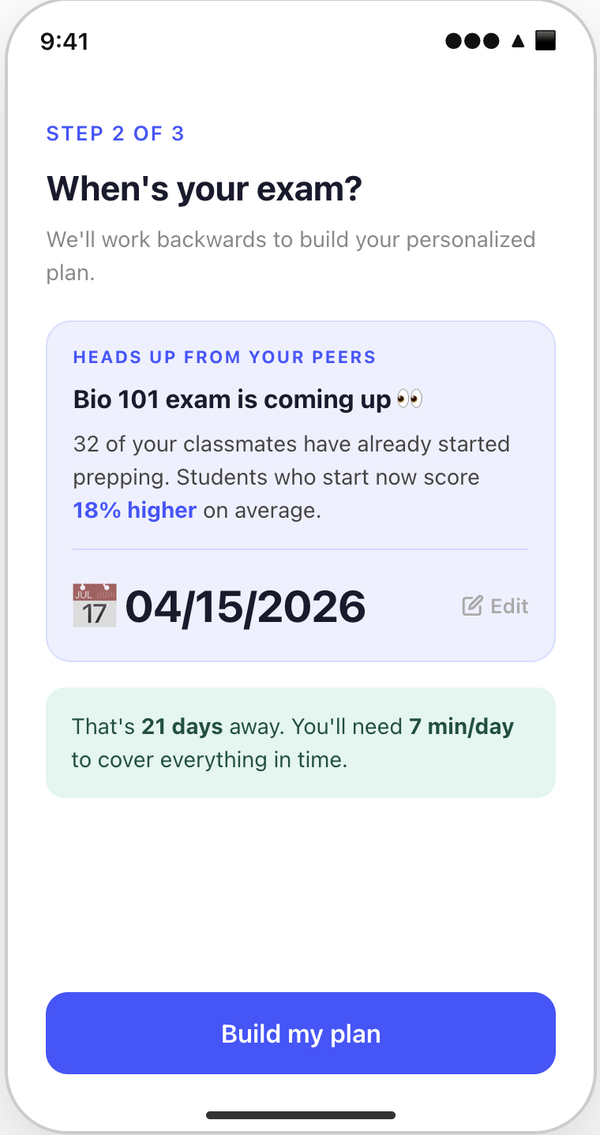 Work backwards from the exam date
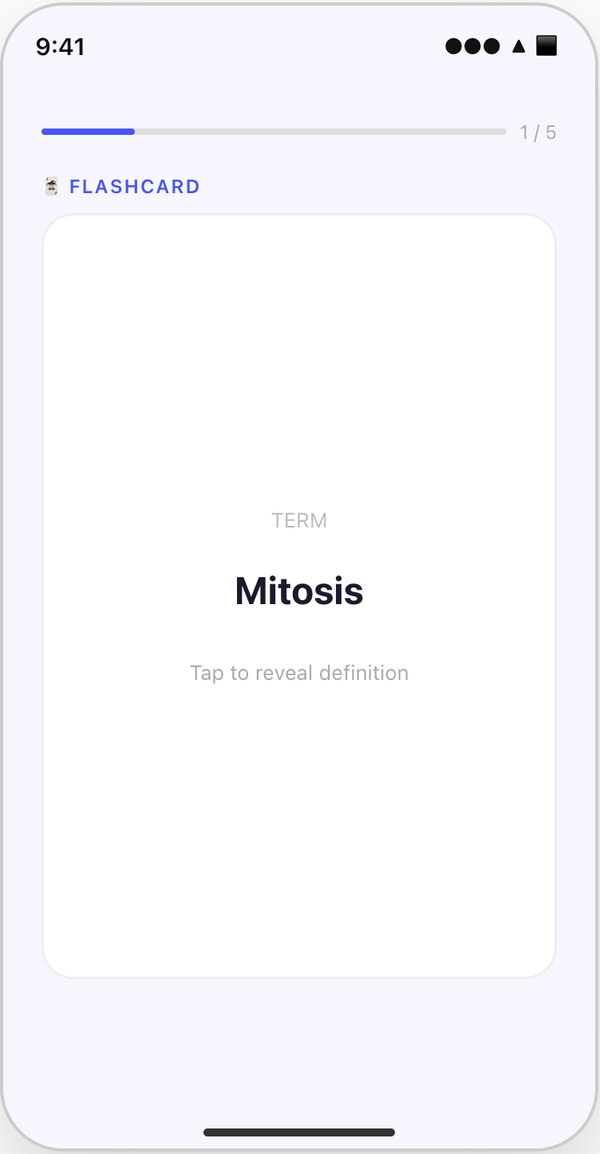 A daily mix of flashcards
 Quizzes and recall prompts
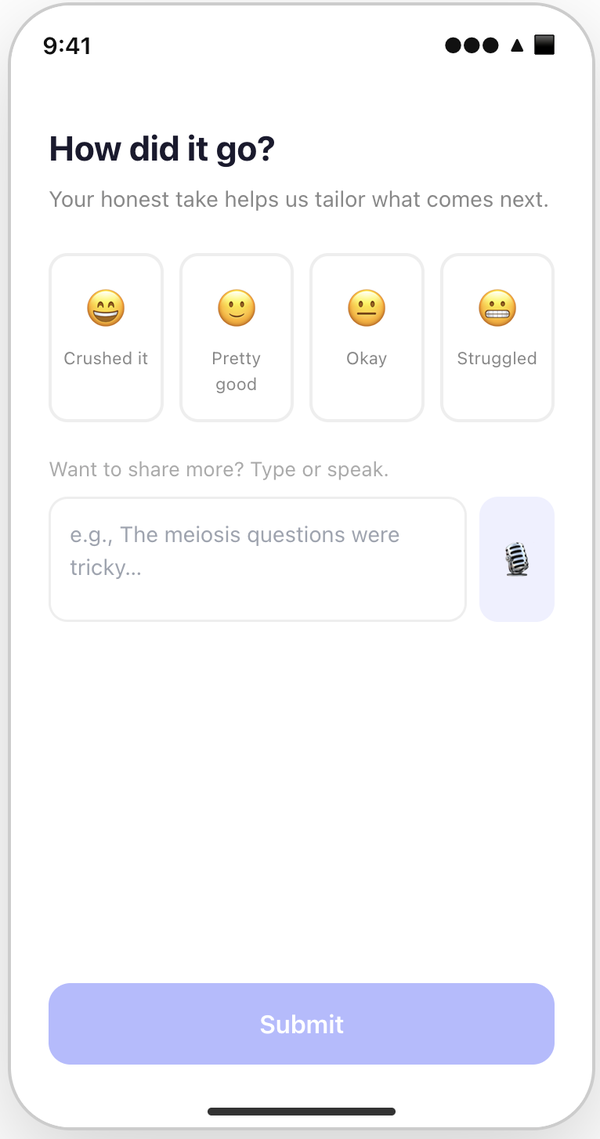 A post-exam reflection
 By text or by voice
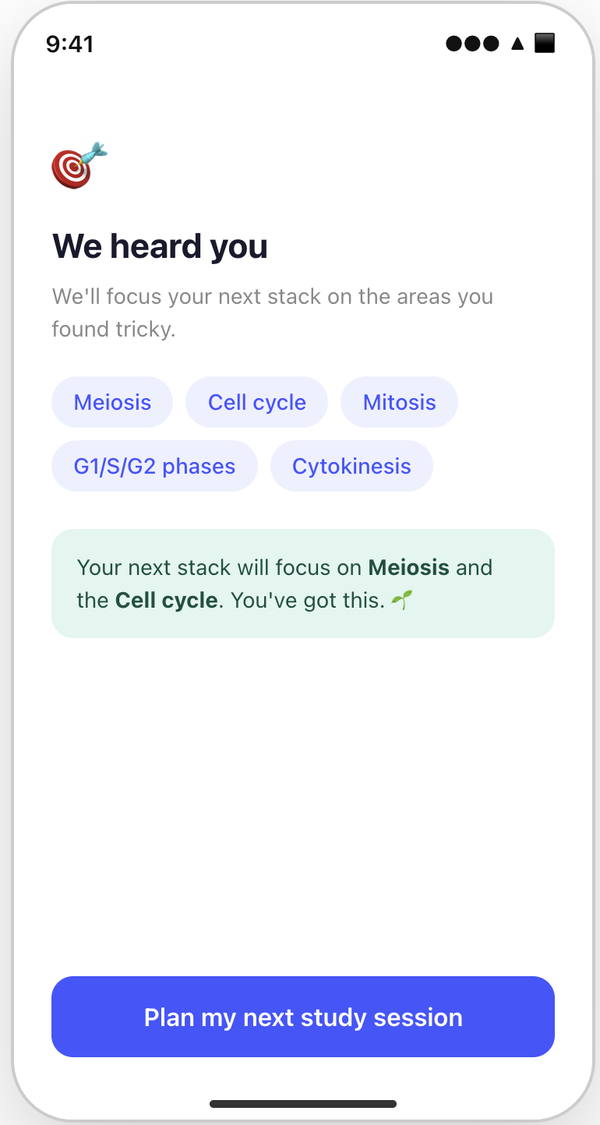 Feedback retargets the next stack
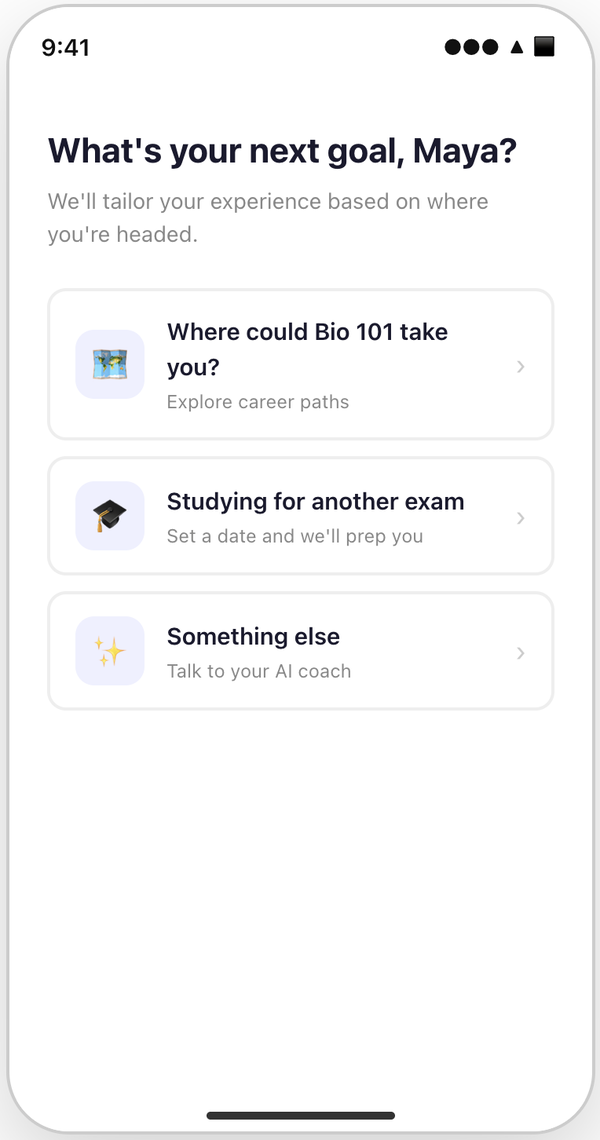 Course over, loop restarts
Try it yourself
The live prototype
The actual prototype we tested:
Pick an exam date and watch the plan recalculate.
Loading interactive prototype…
Bet 2 · Long term
"Knowledge Tree" and the bigger picture
The more sophisticated of the two, and the one that got the strongest reaction in the entire study. The animated reveal drew a consistent "woah" from users at every stage, high school through grad school. Motion and visualization did the explaining that copy could not.
It also surfaced its own gap: nobody could see how memorizing terms actually grew the tree. The link between sets and skills has to be earned, not asserted. That is precisely why it became the horizon bet rather than the roadmap one.
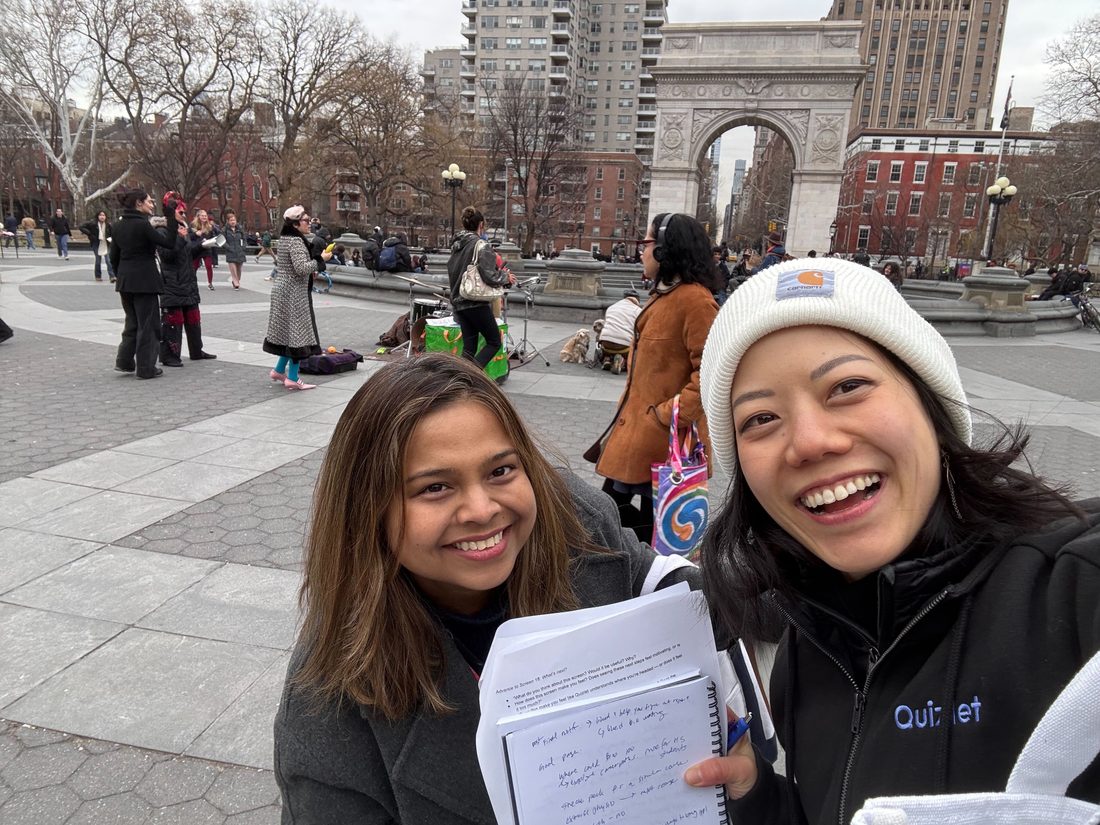
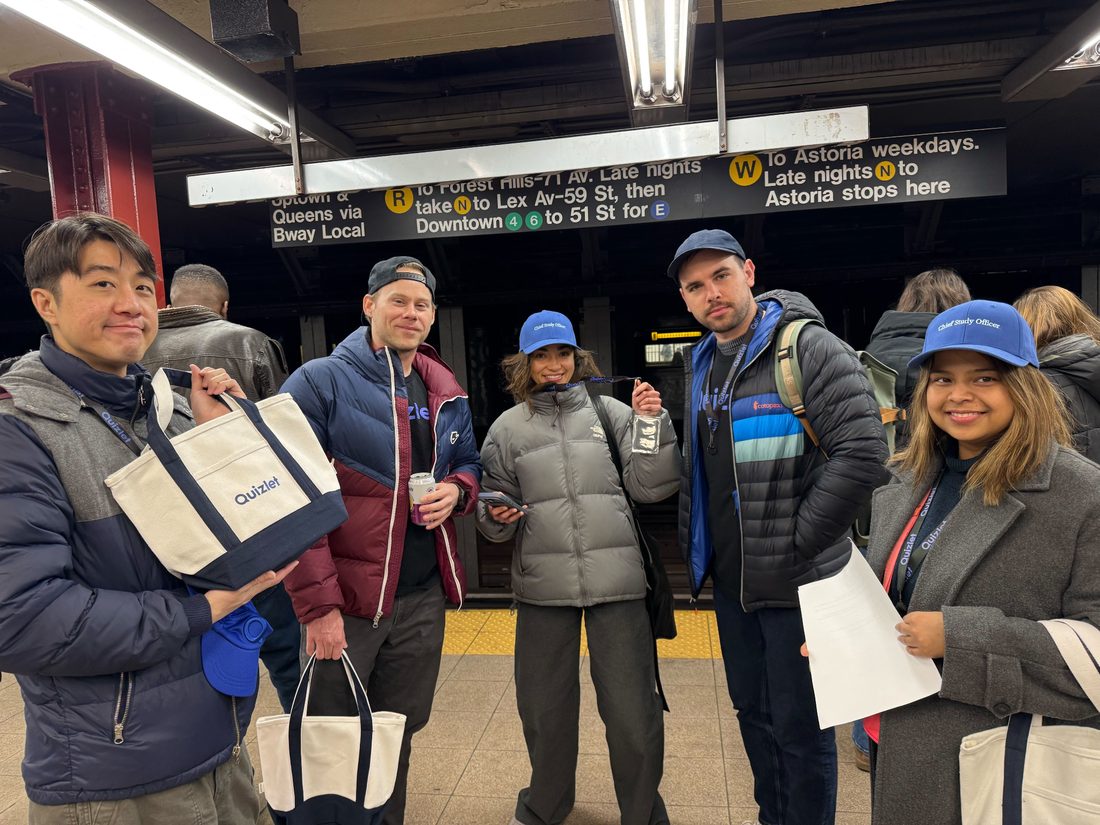
The team divided and conquered, splitting the two prototypes to guerrilla test with students across NYC
I procrastinate a lot, but once I get in the zone, studying isn't that bad. I just need something to make me start.”
- Marcus, Freshman, NYU
It's cool seeing the path actually mapped out. Usually you're just taking classes because you have to, but this makes it feel like they're leading somewhere.”
- Sofia, Junior, NYU
What students told us
Impact: 1 bet on the roadmap, 1 on the horizon
The sprint turned "can motivation move retention" into a ranked portfolio a team could actually run, covering both the next quarter and the next year.
From findings to growth experiments
Each finding became an if/then hypothesis paired with a test small enough to run before committing engineering time.
Deciding how to start costs too much.
Large tasks trigger avoidance.
Not knowing the steps leads to stalling.
The mountain feels too big, the valley too far.
What I took from it
Four focused days gave us space to look beyond the next growth experiment and tackle a harder question: What actually motivates students to keep coming back? We reframed that ambiguity into a shared Motivation Framework, pushed beyond short-term growth tactics, and rapidly prototyped new possibilities to test with real students.
By the end of the sprint, we had turned a fuzzy strategic problem into tangible user evidence and promising product directions that helped shape the longer-term Growth roadmap around retention.